Living in Charleston SC means dealing with humid subtropical weather that can turn minor water issues into major mold problems. If you’ve noticed musty odors, discolored walls, or persistent allergies, mold might be silently invading your space. At Water Damage Charleston, we’ve helped countless homeowners tackle this issue, restoring properties quickly and safely. This guide breaks down everything you need to know about mold removal in Charleston SC, from understanding the risks to implementing effective solutions. Whether it’s from a leaky roof during a summer storm or flooding in low-lying areas, mold thrives here if not addressed promptly. We’ll show you how to identify, remove, and prevent it, empowering you to protect your family and investment. With our local expertise, we’re committed to keeping Charleston homes mold-free.
Understanding Mold Growth and Removal in Charleston SC
Mold is a type of fungus that spreads through microscopic spores, flourishing in damp, warm environments—conditions all too common in Charleston SC due to high humidity and frequent rains. When water damage occurs, like from burst pipes or coastal flooding, these spores can colonize surfaces within 24-48 hours, leading to structural damage and health concerns. Mold removal in Charleston SC isn’t just about scrubbing away visible growth; it’s a comprehensive process to eliminate the source, kill the spores, and prevent recurrence.
What exactly happens during mold infestation? Mold feeds on organic materials like wood, drywall, and insulation, breaking them down over time. In Charleston, older historic homes with wooden frames are particularly vulnerable, as are modern constructions in flood-prone neighborhoods. The key is early detection: black mold (Stachybotrys) is notorious for producing mycotoxins that can cause respiratory issues, while white mold might signal deeper moisture problems.
Why is professional mold removal essential in this region? Charleston’s clay soils and proximity to the Atlantic amplify water intrusion risks, making DIY efforts often insufficient. Regulations from the South Carolina Department of Health and Environmental Control (DHEC) require safe handling to avoid spreading spores, which can contaminate HVAC systems and worsen indoor air quality.
- Health Risks: Exposure can trigger asthma, skin rashes, and even neurological symptoms, especially in children and the elderly.
- Structural Damage: Mold weakens beams and walls, potentially costing thousands in repairs if ignored.
- Economic Impact: In Charleston SC, untreated mold can devalue properties by up to 30%, according to local real estate reports.
- Legal Considerations: Landlords must comply with state habitability laws, facing fines for negligence.
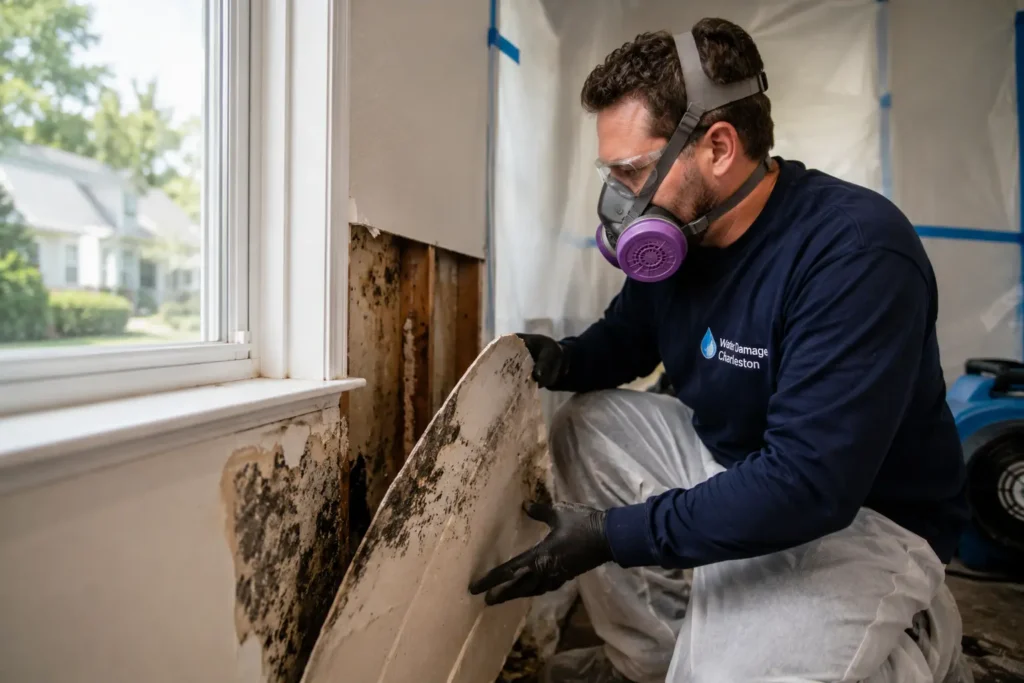
In our experience at Water Damage Charleston, we’ve seen mold hidden behind water-damaged flooring removal in homes on Johns Island, where tidal surges exacerbate issues. Our team uses advanced tools like moisture meters and air sampling to assess the extent accurately. For instance, surface mold under 10 square feet might be manageable with kits, but anything larger demands certified remediation to ensure safety. We follow EPA guidelines, employing HEPA vacuums and antimicrobial treatments tailored to Charleston’s humid climate. Remember, visible mold is just the tip; invisible growth in attics or crawl spaces requires infrared imaging for detection. By addressing the root cause—often linked to undetected leaks— we prevent costly comebacks. Homeowners in areas like Riverland Terrace benefit from our rapid response, minimizing downtime and health risks.
Step-by-Step Guide to Mold Removal in Charleston SC
Tackling mold removal in Charleston SC requires a methodical approach influenced by local factors like hurricane season and sandy soils that retain moisture. Start by ensuring safety: wear N95 masks, gloves, and goggles to avoid spore inhalation. Charleston’s building codes, influenced by historic preservation, mean you might need permits for extensive work in older districts.
First, isolate the area. Seal off rooms with plastic sheeting and disable HVAC to prevent spore spread—crucial in tightly sealed modern homes common in Carolina Bay. Next, address the moisture source. Use dehumidifiers to drop humidity below 50%, as Charleston’s average 70%+ levels fuel growth. For water-damaged areas, professional drying is key; we’ve restored countless properties post-flood using industrial fans.
Removal techniques vary by surface:
- Porous Materials (Drywall, Carpet): Cut out and discard affected sections; never attempt to clean them, as spores embed deeply.
- Non-Porous Surfaces (Tile, Metal): Scrub with a detergent-bleach solution (1 cup bleach per gallon of water), then dry thoroughly.
- Wooden Elements: Sand and apply mold-resistant sealants, but consult pros for load-bearing structures.
Local weather plays a role—post-rainy season, inspect attics and basements regularly. Charleston’s older housing stock, like shotgun-style homes in Mazyck Wraggborough, often has poor ventilation, so installing exhaust fans helps.
Pro Tip: In Charleston SC, test for hidden leaks first with leak detection services before removal. An insider secret: Use borax-based cleaners for natural, non-toxic remediation on small areas—it’s effective against black mold without harsh chemicals, but always ventilate well due to our muggy air.
After cleanup, apply EPA-approved fungicides and monitor with hygrometers. For businesses, like gyms needing fitness center damage restoration, we ensure compliance with health codes. Prevention is proactive: Elevate appliances in flood zones and maintain gutters to divert rainwater. By following these steps, you can reclaim your space efficiently.
Common Mistakes in Mold Removal and How to Avoid Them
Homeowners in Charleston SC often underestimate mold’s resilience, leading to repeated infestations and escalating costs. One frequent error is ignoring the water source—scrubbing visible mold without fixing a leaky pipe allows regrowth within weeks, potentially turning a $500 job into $5,000 in structural repairs.
Another pitfall: Using household cleaners like vinegar alone. While effective on surfaces, they don’t kill roots in porous materials, risking spore dispersal that contaminates your entire home. In humid Charleston, this can spread to neighboring rooms via air currents, amplifying health risks like chronic sinus issues.
DIY overreach is common too. Tackling large areas without containment spreads spores, violating DHEC guidelines and possibly voiding insurance claims. We’ve seen cases where improper removal led to lawsuits from tenants in rental properties on Avondale estates.
Financially, skipping professional assessment means missing hidden damage; mold in insulation, for example, requires full wet insulation removal & replacement, costing $2,000+ if delayed. Safety-wise, not using proper PPE exposes families to mycotoxins, worsening allergies in Charleston’s pollen-heavy spring.
To avoid these, always document damage for insurers and consult experts early. Learn more about our approach on our About Us page. Prevention through regular inspections saves time and money long-term.
Wrapping Up: Secure Your Charleston Home Against Mold
Mold removal in Charleston SC demands vigilance given our wet climate, but armed with knowledge, you can protect your property effectively. Key takeaways include early detection, thorough moisture control, safe removal methods, and avoiding DIY pitfalls that lead to bigger problems. By addressing mold promptly, you safeguard health, preserve structure, and maintain value in this vibrant city.
If the task feels overwhelming, especially after water damage, let professionals handle it. At Water Damage Charleston, our certified team delivers tailored solutions, from inspection to full restoration, ensuring peace of mind. Visit our homepage for more resources. Need help with mold removal in Charleston SC? Call Water Damage Charleston today at (843) 892-8750.
Leave a Reply