If your Charleston home has a basement, crawl space, or foundation that regularly stays damp, you may be wondering whether basement waterproofing Charleston SC homeowners use is necessary.
The answer depends on the property. Basement waterproofing Charleston SC solutions can vary depending on the source of the moisture, foundation type, drainage conditions, and the way water reaches the property. Not every home needs the same waterproofing solution, and waterproofing should not be treated as a guaranteed way to prevent every type of flooding or water damage.
The better question is: Where is the water coming from, and why does it keep reaching the home?
For Charleston homeowners, identifying the source can help determine whether the problem involves drainage, foundation water intrusion, crawl-space moisture, plumbing, or another issue.
Does Basement Waterproofing Charleston SC Make Sense for Your Home?
Your home may need waterproofing or another moisture-control solution if you notice:
- Recurring water on basement floors or walls
- Damp or musty basement or crawl-space conditions
- White mineral deposits on masonry
- Repeated water stains
- Moisture that appears after heavy rain
- Water collecting near the foundation
- Persistently damp crawl-space materials
- Repeated basement or foundation water problems
A recurring moisture problem should be investigated rather than simply covered up with paint, sealant, or cosmetic repairs.
Why Foundation Moisture Matters in Charleston
Charleston properties can experience water from several sources, including rainfall, surface runoff, groundwater, plumbing problems, and flooding.
These are not all the same problem.
For example, foundation waterproofing is intended to help manage certain types of water intrusion around below-grade areas. Flood-resistant construction involves separate considerations, particularly for properties located in designated flood-hazard areas.
FEMA provides specific guidance regarding flood-resistant crawl-space and foundation construction. FEMA Technical Bulletin 11 explains considerations related to crawl spaces and flood forces.
So, waterproofing should be viewed as one part of moisture management, not as a substitute for understanding a property’s flood exposure.
Basement vs. Crawl Space Waterproofing
Not every Charleston home has the same type of foundation.
Basements
Basement moisture can appear around:
- Foundation walls
- Floor-wall joints
- Cracks
- Windows and window wells
- Drainage areas
If water repeatedly appears in the same location, the pattern can help identify where the intrusion is occurring.
Crawl Spaces
Crawl spaces require a different approach.
Moisture may enter through the ground, drainage problems, rainfall, or other sources. Depending on the property, moisture control may involve drainage improvements, ground moisture management, ventilation or conditioning strategies, or other measures.
That is why crawl space waterproofing Charleston homeowners consider should be based on the actual source of moisture rather than a generic solution.
7 Signs of a Foundation Moisture Problem
1. Water Appears After Rain
If water consistently appears after heavy rainfall, inspect how water moves around the property. Gutters, downspouts, grading, drainage paths, and foundation conditions can all matter.
2. White Deposits Appear on Masonry
White, powdery deposits can be efflorescence, which occurs when moisture moves through masonry and leaves mineral deposits behind.
Efflorescence does not automatically mean structural damage, but recurring deposits can indicate moisture movement.
3. Your Basement Smells Musty
A persistent musty odor can indicate an ongoing moisture problem. Look for accompanying signs such as damp materials, staining, condensation, or visible microbial growth.
4. Water Stains Keep Returning
Recurring discoloration or damp marks on walls and floors deserve attention, particularly when they return after rain.
5. Your Crawl Space Stays Damp
Persistent crawl-space moisture can affect insulation, wood components, and other materials. The cause should be identified before choosing a solution.
6. Water Collects Near the Foundation
Standing water near the foundation can indicate a drainage issue. Check gutters, downspouts, grading, and other paths that control rainwater around the property.
7. You Have Repeated Water Damage
If the same area keeps experiencing water problems, repeatedly cleaning up the damage without addressing the source may leave the underlying issue unresolved.
What Causes Foundation Water Intrusion?
For homeowners researching basement waterproofing Charleston SC, the first step should be identifying the source of the moisture rather than choosing a waterproofing system based only on the symptoms.
Several conditions can contribute to moisture entering a below-grade space.
Surface runoff: Rainwater can move toward a foundation when drainage does not direct it away effectively.
Foundation cracks and joints: Certain cracks or joints can provide pathways for water. Their significance depends on the specific condition.
Hydrostatic pressure: Water in surrounding soil can place pressure against foundation walls or floors.
Window wells: Below-grade windows can become vulnerable when water collects around the window area.
Plumbing leaks: A basement water problem does not always originate outside. Plumbing leaks can produce similar signs.
Because different sources require different solutions, identifying the source is more important than immediately choosing a waterproofing product.
How Can Charleston Homeowners Reduce Water Problems?
A few basic maintenance steps can help manage water around the property:
- Keep gutters clear and functioning properly.
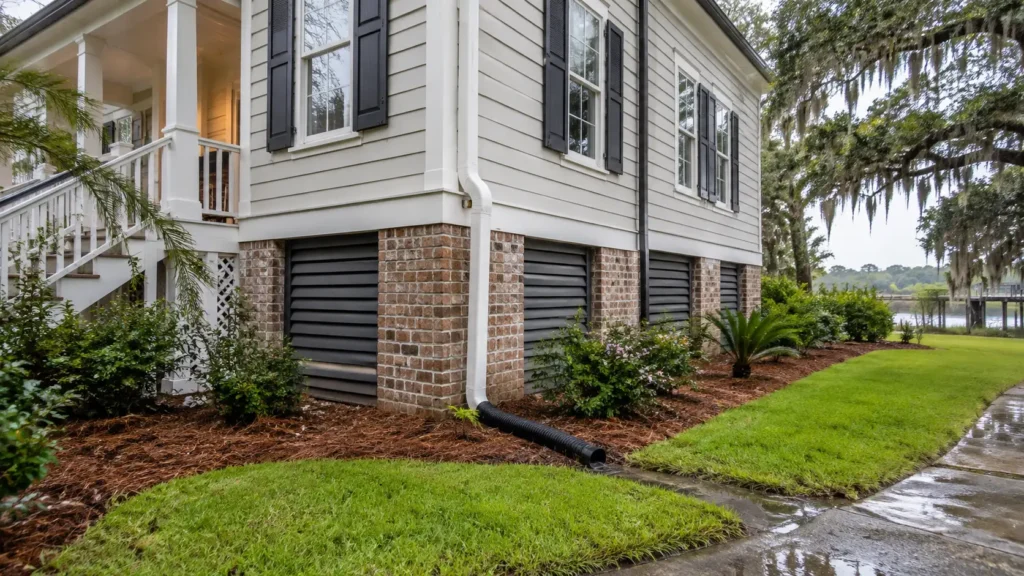
- Make sure downspouts discharge water away from the foundation.
- Watch where rainwater collects during storms.
- Look for standing water around the foundation.
- Inspect basement and crawl-space areas regularly.
- Pay attention to recurring stains, odors, or damp materials.
- Address recurring moisture instead of covering it cosmetically.
These steps do not guarantee that water intrusion will never occur, but they can help identify potential drainage and moisture issues earlier.
Basement Waterproofing Charleston SC: Common Options
The appropriate solution depends on the property and source of water.
Exterior Drainage
Improving drainage around the property can help direct rainwater away from vulnerable foundation areas.
Foundation Waterproofing
Foundation waterproofing focuses on reducing certain types of water intrusion around foundation walls and below-grade areas.
Interior Drainage
Some properties may use interior drainage systems to collect and manage water that reaches a basement.
Sump Pumps
A sump pump can remove collected water from an appropriate drainage or sump system. However, a sump pump is not automatically a complete solution for every foundation moisture problem.
Crawl-Space Moisture Control
Crawl-space moisture management may involve drainage, ground moisture control, ventilation or conditioning strategies, and other measures appropriate to the home’s construction.
Waterproofing vs. Water Damage Restoration
Waterproofing and restoration serve different purposes.
Waterproofing is focused on moisture management and reducing certain types of water intrusion.
Water damage restoration addresses damage that has already occurred.
For example, if a basement repeatedly develops moisture after rainfall, investigating drainage or foundation water intrusion may be appropriate.
If the basement has already flooded, the immediate priority is different. Standing water, wet materials, moisture levels, and drying need to be addressed.
If you are dealing with an active or recent basement flooding problem, see the flooded basement cleanup service for information about the restoration side of the problem.
When Should You Call a Professional?
If you’re researching basement waterproofing Charleston SC because of recurring moisture, a professional assessment can help determine whether waterproofing, drainage improvements, or restoration is the appropriate next step.
Consider having the property evaluated if:
- Water repeatedly enters the same location.
- Moisture returns after rainfall.
- You cannot identify the source.
- Your crawl space remains persistently damp.
- Foundation walls show recurring moisture evidence.
- Standing water has already caused damage.
- Drainage changes have not solved the problem.
The goal should be to identify why the water is getting there, not simply to hide the visible evidence.
Frequently Asked Questions
Do all Charleston homes need basement waterproofing?
No. Waterproofing needs depend on the property’s foundation, drainage, moisture conditions, and source of water intrusion.
Is basement waterproofing the same as flood protection?
No. Waterproofing and flood protection address different issues. Properties exposed to flood hazards may require separate planning and construction considerations.
How can I tell if water is coming through my foundation?
Recurring dampness, water stains, efflorescence, or water appearing at specific foundation locations can provide clues. The timing of the moisture, especially after rainfall, can also help identify the source.
Is a damp crawl space a reason to consider waterproofing?
It can be, but the cause should be identified first. Crawl-space moisture can result from several different conditions, and the appropriate solution depends on the property.
Can waterproofing prevent every type of water damage?
No. Waterproofing is not a guarantee against flooding, plumbing failures, storms, or every other source of water damage.
What should I do if my basement is already flooded?
Prioritize safety, avoid electrical hazards and potentially contaminated water, and arrange professional water extraction and drying when necessary. Waterproofing can be considered separately once the immediate water damage has been addressed.
Final Takeaway
Basement waterproofing Charleston SC homeowners consider should start with finding the source of the moisture.
If your basement or crawl space repeatedly becomes damp, determine whether the problem is related to drainage, foundation water intrusion, groundwater, plumbing, or another condition.
The right solution may involve drainage improvements, foundation waterproofing, interior drainage, sump-pump management, crawl-space moisture control, or professional water-damage restoration.
If you’re dealing with recurring moisture or recent basement water damage, contact Charleston Water Damage at (843) 892-8750 to discuss the situation and determine the appropriate next step.
Leave a Reply