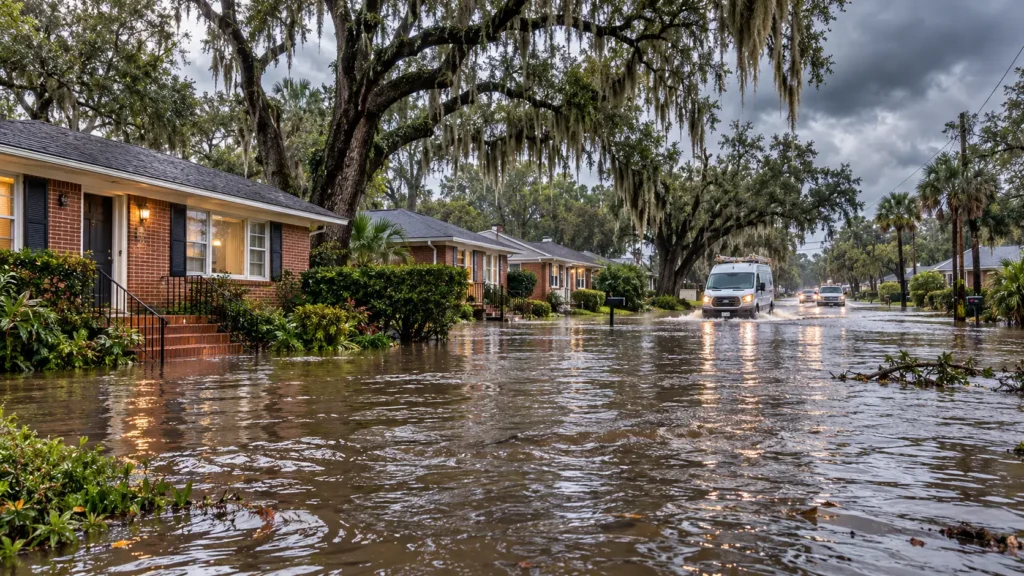
Water damage West Ashley SC homeowners face is one of the most disruptive and financially damaging emergencies a residential property can go through – and in a community built largely across low-lying terrain between the Ashley River and its tidal tributaries, the conditions that cause water damage here are both more frequent and more varied than most residents realize until they are dealing with one firsthand.
West Ashley is Charleston’s largest suburban area, stretching from the James Island Connector west toward Savannah Highway and south toward Johns Island. Its residential landscape includes everything from 1960s ranch homes in Byrnes Downs and Avondale to newer construction in Ashborough East and Grand Bees. That range of housing age and construction type creates a wide spectrum of water damage risks, and understanding which ones apply to your specific home is the starting point for responding correctly.
Why Water Damage West Ashley SC Presents Unique Local Challenges
West Ashley’s geography creates flood conditions that differ from those affecting peninsular Charleston or East Cooper communities. The Ashley River runs along the community’s northern and eastern boundary, and tidal creek systems feed into residential areas throughout Shadowmoss, Savannah Lakes, and the older neighborhoods near Huntington Woods.
Several local factors directly shape how water damage West Ashley SC events develop and how they need to be addressed:
- Low-lying creek corridors – West Ashley contains dozens of tidal creek and drainage channel networks that run adjacent to and through residential subdivisions. During storm events, these systems back up rapidly and push water toward foundations and into crawl spaces from the ground rather than from rainfall alone.
- Aging housing stock in older neighborhoods – Communities like Byrnes Downs, Avondale, and Windermere were developed in the 1950s through 1970s. Homes in these areas commonly have original plumbing systems, crawl space construction without modern moisture barriers, and building materials that absorb water significantly faster than modern equivalents.
- Stormwater infrastructure limitations – West Ashley’s drainage infrastructure was largely designed for development patterns and rainfall intensities that predate the heavier storm events the Lowcountry now regularly experiences. During sustained or intense rainfall, the system cannot process volume quickly enough, and water backs up into lower-lying residential areas.
- Hurricane and tropical storm exposure – West Ashley sits directly within the storm path that affects the greater Charleston metro during Atlantic hurricane season, June through November. Neighborhoods closer to the Ashley River and its connecting tidal systems face storm surge exposure during significant hurricane events.
Common Causes of Water Damage West Ashley SC Homes Experience
Our team responds to water damage West Ashley SC properties across every part of the community. The causes we see most consistently are tied directly to the local terrain, housing age, and seasonal weather patterns.
Stormwater and creek flooding is the most frequent driver of significant water damage events in West Ashley. Neighborhoods that border or sit near tidal drainage systems experience ground-level flooding that enters through crawl space vents, under garage doors, and through foundation seams during sustained rain events. Homes in Shadowmoss, Pierpont, and areas near Rantowles Creek are particularly vulnerable during named storm events.
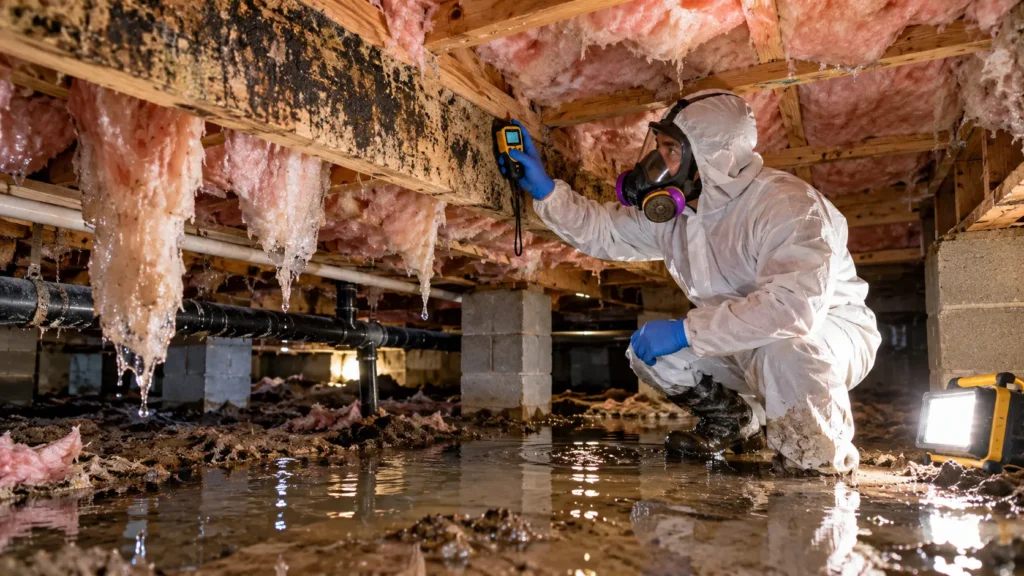
Crawl space moisture intrusion affects a large share of West Ashley’s older housing stock. Unlike slab-on-grade construction, crawl space homes have a below-floor environment that accumulates standing water and sustained high humidity during wet periods. Without proper encapsulation and a functioning drainage system below the floor, moisture attacks floor joists, subfloor sheathing, and insulation from underneath. Many West Ashley homeowners are unaware of crawl space moisture problems until floors begin to feel soft or a persistent musty odor develops inside the living space.
Burst and leaking pipes remain a consistent risk throughout the year. West Ashley experiences occasional winter freeze events, typically January through February, when pipes in uninsulated exterior walls, crawl spaces, and garage ceilings are vulnerable to freezing and splitting. In older Avondale and Byrnes Downs homes, galvanized steel supply lines that have been in service for decades fail suddenly at corroded sections without any prior indication.
HVAC condensate line overflow is a frequently underestimated cause of ceiling and wall water damage in West Ashley homes. When air handler condensate drain lines clog during the high-humidity summer months – which in the Lowcountry means May through October – overflow water drips into the ceiling cavity below the unit and travels along framing members before appearing as a stain on the ceiling drywall. By the time the stain is visible, the framing and insulation above have often been wet for days.
Appliance failures from water heaters, washing machines, and refrigerator supply lines produce sudden indoor flooding without warning. A water heater failure in a utility closet or garage can release 40 to 80 gallons before the homeowner notices anything has gone wrong.
For any of these situations, our flood damage cleanup service covers all of West Ashley with certified 24-hour response.
Immediate Steps After Water Damage West Ashley SC
The actions you take in the first 60 minutes after discovering water damage West Ashley SC properties have experienced determine how much of your home can be saved versus how much requires full replacement. Here is the correct order:
1. Shut off the water source immediately: For internal plumbing failures, locate your main water shutoff valve and close it without delay. In West Ashley crawl space homes, the main shutoff is often near the crawl space access hatch or at the meter near the street. Every minute of active flow adds water volume to the materials your home is built from.
2. Turn off electricity to affected rooms at the breaker box: Do not enter any room with standing water while circuits remain active. Water contact with live electrical current creates serious risk that is not visually obvious from the doorway.
3. Document everything before touching or moving anything: Use your phone to capture photos and video of every affected room, waterline marks on walls, damaged flooring, furniture, and any structural damage. Timestamp your documentation – it forms the foundation of your insurance claim and restoration scope of work.
4. Ventilate if weather and conditions allow: Open interior doors and windows to promote airflow through the home. Natural ventilation slows mold development while professional extraction equipment is en route.
5. Call a certified restoration team immediately: Water damage West Ashley SC homes sustain spreads into wall cavities, under flooring, and into crawl spaces within hours. Professional moisture mapping and extraction equipment addresses moisture inside structural materials that residential tools cannot reach. Our flooded basement and crawl space cleanup service is specifically equipped for the below-floor moisture conditions common across West Ashley’s older crawl space housing stock.
Mold Risk After Water Damage West Ashley SC
In West Ashley’s subtropical climate, mold is not a theoretical risk after water damage – it is a near-certain outcome if structural moisture is not professionally removed within the correct timeframe. The combination of high ambient humidity and the organic materials inside a typical crawl space or wall cavity creates ideal mold growing conditions the moment sustained moisture is present.
Mold spores begin colonizing wet drywall, wood framing, crawl space insulation, and subfloor sheathing within 24 to 48 hours of water exposure under standard conditions. In West Ashley’s summer months, when outdoor humidity regularly exceeds 80%, that timeline is shorter. Crawl space flooding presents a particular mold risk because the enclosed, dark, humid environment below the floor accelerates mold development on floor joists and subfloor materials in ways that the living space above gives no indication of until damage is already extensive.
The most costly mold situations are those that develop invisibly inside wall cavities, crawl spaces, and attic sections. A soft area in the floor, a musty smell that does not go away with ventilation, or unexplained respiratory symptoms inside the home are all indicators that hidden mold may already be established behind surfaces.
According to the South Carolina Department of Health and Environmental Control, mold in residential structures requires professional assessment and remediation when materials have been wet for more than 24 hours without complete drying. Professional moisture verification after drying – confirmed with calibrated moisture meters rather than surface feel – is the only reliable way to confirm mold conditions have been eliminated rather than temporarily suppressed.
Professional Restoration for Water Damage West Ashley SC
When a certified team arrives at a West Ashley property, the restoration process follows a documented sequence that addresses both visible and hidden damage through to verified clearance.
Moisture mapping uses thermal imaging cameras and calibrated moisture meters to identify exactly where water has traveled inside walls, under flooring, in the crawl space, and in any attic areas affected by roof or HVAC failures. In West Ashley’s tidal flooding scenarios, water frequently enters from multiple directions simultaneously – mapping confirms the full damage picture before extraction equipment is positioned.
Water extraction using commercial truck-mounted systems removes standing water and saturated surface materials at rates that residential equipment cannot approach. For crawl space flooding – which affects a significant portion of West Ashley properties – below-floor extraction is included in the same response, along with assessment of insulation that cannot be dried and must be removed.
Structural drying uses industrial air movers and commercial desiccant dehumidifiers running in combination to pull moisture from inside structural materials over three to five days for moderate events. Daily moisture readings at consistent measurement points track drying progress inside walls and flooring rather than relying on surface appearance.
Clearance verification with calibrated moisture meters confirms all structural materials have returned to acceptable moisture content levels before any reconstruction work begins. This step prevents the secondary mold growth that appears weeks after a restoration job seemed complete.
We serve all West Ashley neighborhoods including Avondale, Byrnes Downs, Windermere, Shadowmoss, Grand Bees, Pierpont, Savannah Lakes, Ashborough East, and all surrounding communities. For our complete service coverage, visit our areas we serve page.
For context on how water damage develops across other Charleston metro communities, our guide on water damage in Goose Creek SC covers the shared regional challenges facing Lowcountry homeowners in communities with similar terrain and housing profiles.
Water Damage West Ashley SC – Frequently Asked Questions
How quickly does water damage spread through a West Ashley home?
Within the first hour, water penetrates drywall at floor level and begins wicking upward into wall cavities. Within four to six hours, subfloor materials swell and crawl space insulation becomes saturated. Within 24 hours, mold conditions begin developing in wet structural materials. The sooner professional extraction begins, the more material can be dried and saved rather than removed and replaced.
Does homeowners insurance cover water damage in West Ashley SC?
Standard homeowners policies in South Carolina cover sudden and accidental water damage from internal sources including pipe bursts and appliance failures. Flooding from external sources such as stormwater, creek overflow, and tidal surge typically requires a separate flood insurance policy through FEMA’s National Flood Insurance Program or a private flood carrier. Many West Ashley homeowners near tidal creek corridors are required by their mortgage lender to carry flood insurance.
How do I know if my West Ashley crawl space has water damage?
Common indicators include soft or springy flooring, a persistent musty odor inside the home, visible staining on lower baseboards, unexplained increases in indoor humidity, and visible discoloration or mold on floor joists during a crawl space inspection. Professional thermal imaging and moisture mapping can identify crawl space moisture conditions before they produce visible symptoms inside the living space.
How long does water damage restoration take in West Ashley SC?
Structural drying typically takes three to five days for moderate water damage events. Full restoration, including any drywall repair, insulation replacement, and flooring reinstallation, depends on the extent of damage confirmed during moisture mapping. Your restoration team should provide a written scope of work and timeline estimate before any work begins.
Is West Ashley prone to flooding?
Yes. Large portions of West Ashley fall within FEMA designated flood zones due to proximity to the Ashley River, tidal creek drainage networks, and low-lying terrain across much of the community. Homeowners should verify their property’s flood zone designation and confirm their insurance coverage is appropriate for their flood risk level.
What areas in and around West Ashley does your team serve?
We cover all of West Ashley, including Avondale, Byrnes Downs, Windermere, Shadowmoss, Grand Bees, and Savannah Lakes, as well as James Island, Johns Island, Ladson, and all surrounding Lowcountry communities, 24 hours a day.
CTA
Water damage West Ashley SC homeowners cannot afford to wait on. Every hour of untreated moisture increases mold risk, structural damage, and your total restoration cost. Our IICRC certified team covers West Ashley and all surrounding Lowcountry communities around the clock with fast response, professional drying equipment, and direct insurance claim support.
Call (843) 892-8750 now for immediate emergency response.
Leave a Reply