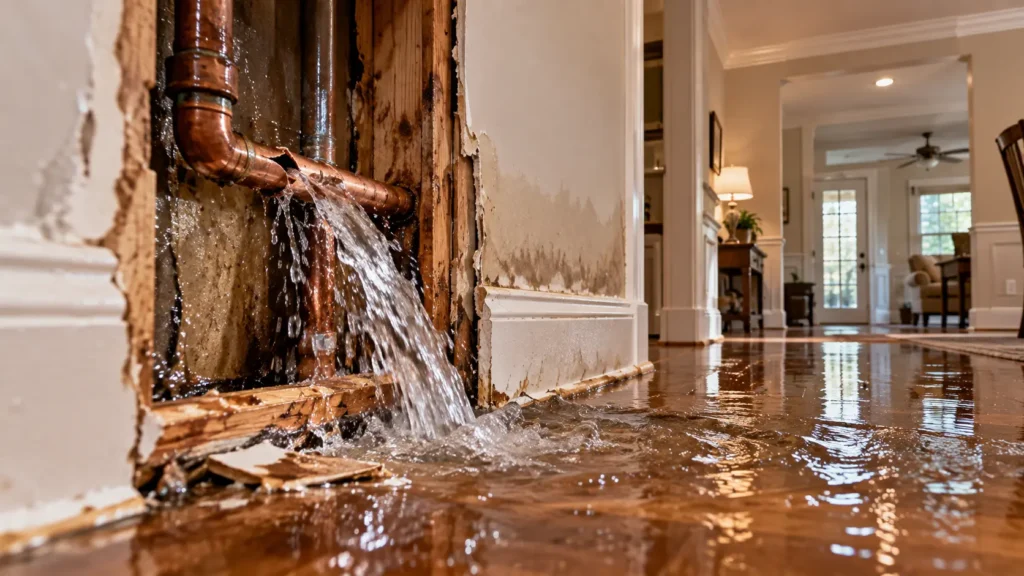
Burst pipe water damage Charleston SC homeowners face is one of the most destructive and time-sensitive emergencies a property can go through. Unlike storm flooding that builds gradually, a burst pipe releases water inside your walls, floors, and ceilings at full mains pressure – and in Charleston’s subtropical humidity, the damage compounds every single hour you wait.
This guide covers exactly what happens after a pipe bursts, why the restoration process in Charleston is more complex than most homeowners expect, and what steps give you the best chance of saving your structure, your belongings, and your insurance claim.
Why Burst Pipe Water Damage Charleston SC Is Different From Other Cities
Charleston’s climate changes the equation significantly when a pipe bursts inside your home. Most restoration guides are written for inland or dry-climate properties where homeowners have a 48-hour window before mold becomes a serious threat. In Charleston, that window is shorter.
The city sits in a humid subtropical zone where indoor humidity stays elevated year-round, particularly from May through October. When water from a burst pipe saturates drywall, wood framing, and subfloor materials, mold spores already present in the air begin colonizing those wet surfaces within 18 to 24 hours under Charleston’s typical conditions – not 48 hours. That difference matters for every decision you make after discovering the damage.
Charleston also has a significant stock of older homes, particularly in neighborhoods like Wagener Terrace, Radcliffeborough, and Avondale, where original plumbing infrastructure is decades old. Galvanized steel pipes common in pre-1980s construction corrode from the inside over time and fail suddenly rather than gradually. Homeowners in these areas often have no warning before a section of pipe gives way.
What Causes Burst Pipes in Charleston SC Homes
Understanding the trigger helps with prevention, but it also helps with the restoration assessment because the water source affects the contamination category of the damage.
The most common causes of burst pipe water damage Charleston SC restoration teams respond to include:
- Winter cold snaps – Charleston occasionally experiences brief freezes, typically January through February. Pipes in uninsulated exterior walls, crawl spaces, and garage walls are most vulnerable. Water expands when it freezes and splits pipe walls at joints and fittings.
- High water pressure – Charleston Water System delivers water at pressures that can spike during demand changes. Older pipes with weakened walls fail at fittings and connections under sustained high pressure.
- Corrosion in aging infrastructure – Galvanized and cast iron supply lines common in homes built before 1980 develop internal rust buildup that eventually creates pinhole leaks and sudden full failures.
- Physical damage – Renovation work, pest damage, and ground movement from soil shifting – common in Charleston’s low-lying areas – can stress and eventually rupture pipe sections.
- Tree root intrusion – Main supply lines running through landscaped areas in older Charleston properties are susceptible to root intrusion that cracks pipes over time.
The water category matters for restoration. A clean supply line burst produces Category 1 water, which is the most manageable. A line connected to a recirculation system or one that has been standing can introduce contaminants that elevate the classification and change the materials that can be dried versus those that must be removed.
The True Cost of Waiting After Burst Pipe Water Damage Charleston SC
The single most common mistake Charleston homeowners make after a pipe burst is underestimating how quickly damage escalates. What looks like a manageable wet floor in the first hour becomes a significantly more complex and expensive job by the following morning.
Here is what actually happens inside your home during the first 24 hours of untreated burst pipe water damage:
- Within 1 hour – Water absorbs into drywall at the floor level and begins wicking upward. Subfloor materials start swelling at seams and fastener points.
- Within 4 hours – Water reaches wall cavities and begins saturating insulation. Hardwood flooring starts cupping. Particleboard subfloor begins to delaminate.
- Within 12 hours – Drywall becomes structurally compromised and begins to crumble. Water migrates through floor joists to lower levels. Odors begin developing.
- Within 24 hours – Mold colonization begins inside wall cavities and under flooring. Materials that could have been dried and saved at hour one now require full removal and replacement.
The difference between a $4,000 restoration job and a $14,000 gut-and-rebuild is almost always the response time.
Emergency Steps for Burst Pipe Water Damage Charleston SC
If you are dealing with burst pipe water damage right now, follow these steps in this exact order:
1. Shut off the main water supply immediately. Your main shutoff is typically located near the street-facing wall of the home, under the kitchen sink in some configurations, or near the water meter outside. Every minute of active flow multiplies the damage volume.
2. Cut power to affected rooms at the breaker box. Do not enter any room with standing water while circuits are live. Water contact with live electrical current causes serious injury and is a risk that is not always visible from the doorway.
3. Document before touching anything. Use your phone to photograph and video every affected room, waterline marks on walls, damaged materials, and visible structural issues. Capture timestamps. Your insurance claim outcome depends heavily on documentation created before cleanup begins.
4. Open windows and doors if weather allows. Ventilation slows mold development and helps with initial evaporation while you wait for professional equipment.
5. Call a certified restoration team. Our burst pipe damage cleanup service covers all of Charleston and the surrounding Lowcountry with 24-hour response. Certified technicians arrive with industrial extraction, moisture mapping, and drying equipment ready to deploy immediately.
For guidance on what to expect during the full cleanup process after water intrusion, our step-by-step flood cleanup guide for Charleston homeowners covers the complete restoration sequence from water removal through final moisture verification.
Professional Restoration Process for Burst Pipe Water Damage Charleston SC
Once a certified team arrives, the process follows a structured sequence that addresses both visible damage and hidden moisture that DIY efforts consistently miss.
Moisture mapping comes first. Industrial moisture meters and thermal imaging cameras identify exactly where water has traveled inside walls, under flooring, and into structural cavities. In Charleston homes with crawl spaces, moisture mapping includes the area below the floor system, where water frequently migrates through gaps and subfloor seams without any visible sign from inside the home.
Water extraction removes standing water and surface-level moisture using truck-mounted extraction systems that pull significantly more volume per hour than any residential equipment. For properties with affected crawl spaces, our water pipe break repair and cleanup service includes below-floor extraction as part of the same response.
Structural drying uses commercial-grade air movers and desiccant dehumidifiers positioned to create controlled airflow through the material mass rather than just across surfaces. This phase typically runs for three to five days for moderate burst pipe events, with moisture readings taken at each visit to track drying progress inside structural materials.
Clearance verification confirms with calibrated moisture meters that all structural materials have returned to acceptable moisture content levels before any drywall replacement or flooring reinstallation begins. Skipping this step is why many homeowners experience mold problems weeks after a restoration job that appeared complete.
We serve homeowners across Charleston, North Charleston, Goose Creek, Mount Pleasant, James Island, and surrounding communities. For a full list of locations, visit our areas we serve page.
Insurance Claims for Burst Pipe Water Damage Charleston SC
Standard homeowners insurance policies in South Carolina typically cover sudden and accidental burst pipe water damage – but the documentation requirements are strict and the timeline for filing matters.
According to the South Carolina Department of Insurance, policyholders have a responsibility to take reasonable steps to prevent further damage after a loss event. This means calling a professional restoration company is not just advisable – it is often a policy requirement. Waiting creates two problems: additional damage from untreated moisture, and a potential claim denial based on failure to mitigate.
Your restoration company should provide a written damage assessment, moisture readings, equipment logs, and a detailed scope of work that your insurance adjuster can review. Our team provides complete documentation packages for every job and works directly with adjusters to support your claim from initial assessment through final sign-off.
Burst Pipe Water Damage Charleston SC – Frequently Asked Questions
How quickly should I call a restoration company after a burst pipe in Charleston SC?
Immediately – within the first hour if possible. Charleston’s humidity means mold development begins faster than in drier climates. Every hour of delay increases the scope of moisture migration and the likelihood that materials that could be dried will instead require full replacement.
Does homeowners insurance cover burst pipe water damage in Charleston SC?
In most cases, yes. Standard homeowners policies cover sudden and accidental pipe failures. Gradual leaks and negligence-related damage are typically excluded. Document everything before cleanup begins and contact your insurer the same day as the incident.
How long does burst pipe water damage restoration take in Charleston SC?
Structural drying alone typically takes three to five days for moderate events. The full restoration timeline, including any drywall repair and flooring replacement, depends on the extent of damage. Your restoration team should provide a written scope and timeline estimate before work begins.
Can I dry out burst pipe water damage myself with fans?
Residential fans move surface air but do not remove moisture from inside wall cavities, subfloor materials, or insulation. Professional drying equipment is specifically designed to pull moisture out of material mass. DIY drying consistently leaves residual moisture that feeds mold growth inside walls weeks after the surface appears dry.
What areas of Charleston SC does your team serve for burst pipe emergencies?
We respond across Charleston, North Charleston, Goose Creek, Mount Pleasant, West Ashley, James Island, Daniel Island, Johns Island, and surrounding Lowcountry communities – 24 hours a day.
Will burst pipe water damage cause mold in my Charleston home?
If the affected materials are not professionally dried within 24 to 48 hours, mold growth inside wall cavities is highly likely given Charleston’s humidity levels. Professional moisture verification after drying is the only reliable way to confirm that mold conditions have been eliminated.
CTA
Burst pipe water damage Charleston SC homeowners cannot afford to wait on. If you are dealing with an active water event or discovered flooding from a recent pipe failure, our certified team responds across Charleston and the Lowcountry 24 hours a day.
Call (843) 892-8750 now for immediate emergency response.
Leave a Reply