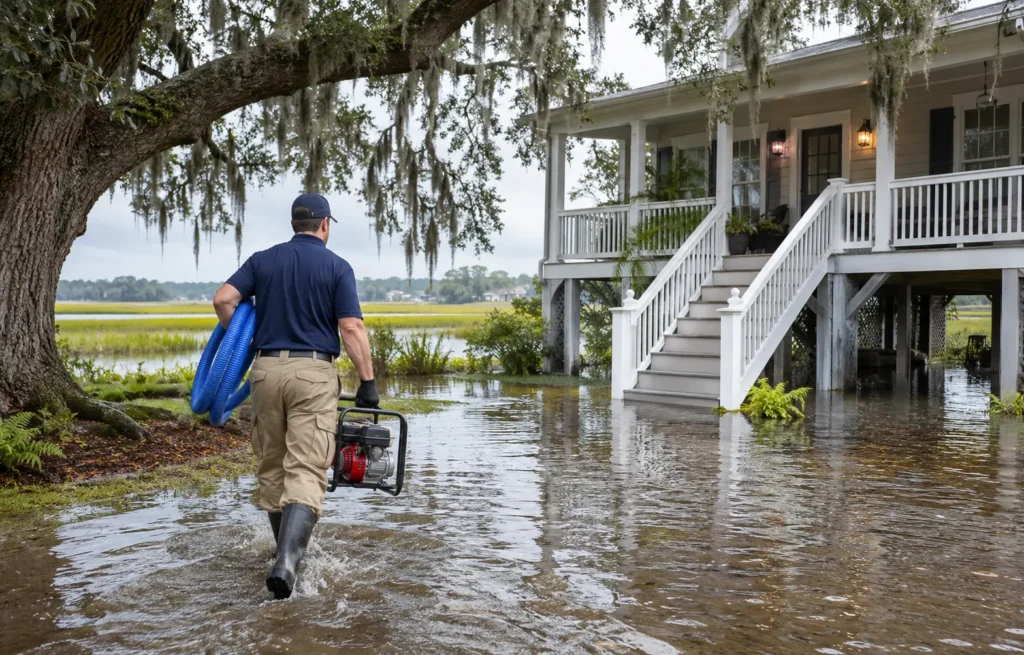
Water damage Johns Island SC homeowners deal with is shaped by the setting: tidal creeks and marsh, heavy summer storms, salt air, and homes that sit empty for weeks at a time, which means a leak can run for a long while before anyone finds it.
Johns Island is a large sea island southwest of Charleston, and the main routes to Kiawah Island and Seabrook Island pass through it. Homes here range from long-established rural properties to newer subdivisions and vacation homes, so the right response depends on what kind of home you have and what kind of water got in.
This guide covers what makes water damage Johns Island SC homes different from the mainland suburbs, what to do first, and how to get the structure dry before mold gets a start.
Why Water Damage Johns Island SC Is Different
A few local conditions shape how water damage behaves here:
- Tidal and marsh setting. Creeks and marsh run through much of the island, and heavy rain during a high tide can leave water with nowhere to go.
- Storm exposure. Hurricane season runs June 1 through November 30. Wind-driven rain can get through roofs, windows, and doors, and major storms can bring surge.
- Salt air and humidity. Constant humidity slows drying, and salt air is hard on metal parts such as HVAC components and fasteners.
- Empty homes. Vacation and second homes can sit unoccupied, so a small leak can run unnoticed.
- Access. Roads and bridges can flood or close during a storm, so help may take longer to reach you, and calling early matters.
Common Causes of Water Damage Johns Island SC Homes Face
These are the causes behind most water damage Johns Island SC homes experience:
Tidal and storm flooding. Surge, rising creek water, and runoff can push water into yards, garages, and lower levels.
Wind-driven rain. Damaged shingles, failed seals, and loose flashing let water in during storms, and it often runs along framing before it shows.
Plumbing leaks. A failed fitting or cracked pipe can run for days in a home nobody is using.
HVAC condensate overflow. In humid months, a clogged drain line can overflow into the ceiling or wall below.
Water heater and appliance failures. Tanks, washing machine hoses, and ice maker lines tend to fail suddenly.
Crawl space moisture. Many Lowcountry homes sit on crawl spaces or raised foundations, and standing water or constant humidity underneath can affect joists, subfloor, and insulation without any sign inside. If your crawl space stays damp, our crawl space encapsulation service is built for ongoing moisture problems.
What to Do First When Water Damage Johns Island SC Happens
The first hour matters most. Work through these in order:
- Stop the source. Shut off the main water supply or the valve for the leaking fixture.
- Turn off power to wet areas. Switch off the breaker for any room with standing water before you step in, and stay out if you cannot reach the panel safely.
- Take photos and video. Record the water level, damaged items, and the source before anything is moved.
- Stay out of floodwater and off flooded roads. The National Weather Service in Charleston posts forecasts and flood alerts for the area, and driving through flooded roads is never worth the risk.
- Call the same day. Standing water and wet materials should be dealt with fast, and our flood damage cleanup service covers flooding that came from outside the house.
Flood Damage Restoration Johns Island SC: What to Expect
Floodwater from tidal creeks and storm surge is not clean water. It can carry salt, sediment, and contamination, so soaked carpet, padding, insulation, and drywall often have to be removed instead of dried.
Flood damage restoration Johns Island SC homeowners need usually follows this sequence:
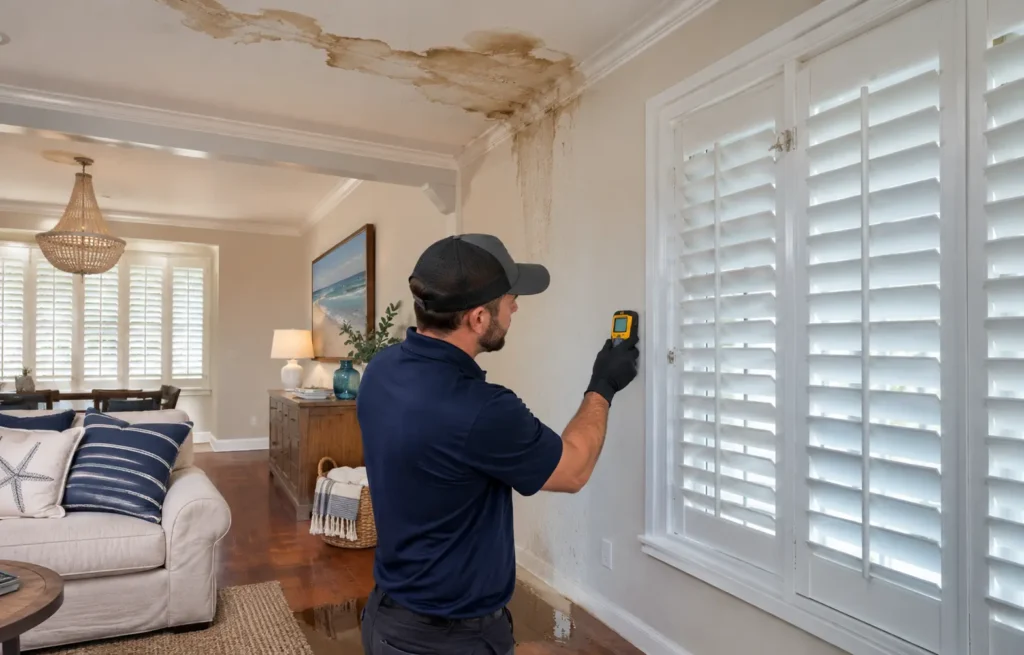
- Assessment and moisture mapping. Meters and thermal imaging show where water traveled, including inside walls and under floors.
- Water removal. Standing water comes out first so drying can begin early.
- Removal of materials that cannot be saved. Contaminated porous materials are taken out instead of dried.
- Structural drying. Air movers and dehumidifiers pull moisture from what remains, and in humid coastal air this takes monitoring, not guesswork.
- Clearance readings. Repairs begin only after materials test dry.
Any water damage restoration Johns Island SC job should include those readings before walls are closed up or flooring goes back down.
Vacation and Second Homes: Catching Leaks Before They Spread
An empty home is where small problems become big ones, because nobody is there to notice a drip, a stain, or a musty smell. A few habits help:
- Shut off the main water supply when you leave for an extended time
- Ask someone to check the property regularly, especially after storms
- Place leak sensors near the water heater, under sinks, and by the AC drain pan
- Keep the AC set so indoor humidity does not climb while you are away
- Keep a restoration company’s number where your caretaker can find it
These steps matter just as much on Kiawah and Seabrook, and the same logic applies to water damage restoration Kiawah Island SC owners arrange after a storm while they are away. A neighbor or property manager who finds water should shut off the supply, take photos, and call right away, because water damage Johns Island SC owners discover after weeks away is usually further along than it looks.
Johns Island is next door to West Ashley, and our guide to water damage in West Ashley SC covers the mainland side of the same storms.
Water Damage Johns Island SC: Frequently Asked Questions
How fast should I act after water damage on Johns Island?
Start right away. Mold can begin growing on wet materials within about 24 to 48 hours, and humid weather slows drying. Storms can make roads harder to travel, so call as early as you safely can.
Does homeowners insurance cover storm surge and tidal flooding?
Flooding from tidal surge or rising water typically needs a separate flood insurance policy. Rules for wind and storm damage vary, and many coastal policies have separate deductibles for named storms. Read your policy and talk to your insurer before cleanup so you know what documentation they need.
What should I do if my vacation home has a leak while I am away?
Ask a neighbor or property manager to shut off the main water supply if it is safe, take photos, and call a restoration company the same day. Water that has been running in an empty home often reaches walls and flooring before it is noticed, so a moisture assessment is worth doing even if the surface looks dry.
Can I drive through flooded roads to reach my home?
No. Flooded roads can hide washouts and deep water, and the National Weather Service advises never driving through them. Wait until the water recedes, and check local alerts before you travel.
Is saltwater flooding worse than freshwater flooding?
Usually it is more complicated. Tidal and storm surge water can carry salt, sediment, and contamination, so more materials often have to be removed, and salt can speed up corrosion on metal components. Water from a clean supply line leak is generally less risky if it is dried quickly.
Need Help With Water Damage on Johns Island?
Water damage Johns Island SC homeowners face gets worse with every hour water sits, and storms can slow access, so call early. Our team is available 24/7 to assess the damage and start drying. You can see how we cover nearby communities on our Seabrook Island service area page.
Call (843) 892-8750 now.
Leave a Reply