Flood damage restoration Charleston SC homeowners go through runs in phases, and knowing the order helps you tell whether the work on your home is on track.
Charleston can flood from heavy rain, tidal surge, or both at once, and the water that comes in is often not clean. That changes what can be saved and how long recovery takes, so this timeline for flood damage restoration Charleston SC jobs uses ranges and conditions instead of promises.
Use it as a reference for what should be happening on day one, day three, and week two, and for what to ask if it is not.
Why Flood Damage Restoration Charleston SC Follows a Sequence
Each phase depends on the one before it:
- Water has to come out before drying can work. Equipment cannot dry a home that is still holding standing water.
- Damaged materials have to come out before drying finishes. Saturated porous materials can hold contamination and moisture that no amount of airflow fixes.
- The structure has to be dry before repairs start. Rebuilding over damp materials invites mold and failed finishes.
- Humidity slows everything. Lowcountry air is damp most of the year, so drying is verified with readings, not guessed.
If your flooding came from outside the house, our flood damage cleanup service is the place to start.
Hour 0 to 1: Safety, Source, and Documentation
In the first hour of any flood damage restoration Charleston SC job, the priorities are safety and information, not cleanup:
- Turn off power to wet areas at the breaker box before stepping into standing water, and stay out if you cannot reach the panel safely.
- Stop the source if it is a plumbing failure, by shutting off the main water supply.
- Stay out of floodwater when you can. Federal flood safety guidance, including Ready.gov’s flood information, advises staying out of floodwater, which can carry contaminants and hidden hazards.
- Take photos and video of the water level, damaged items, and waterlines before anything is moved.
- Call a restoration company the same day.
For the full homeowner checklist, see our step-by-step flood cleanup guide.
Hours 1 to 24: Extraction, Tear-Out, and Moisture Mapping
Once a team is on site, the first day is usually about getting water out and finding out how far it went:
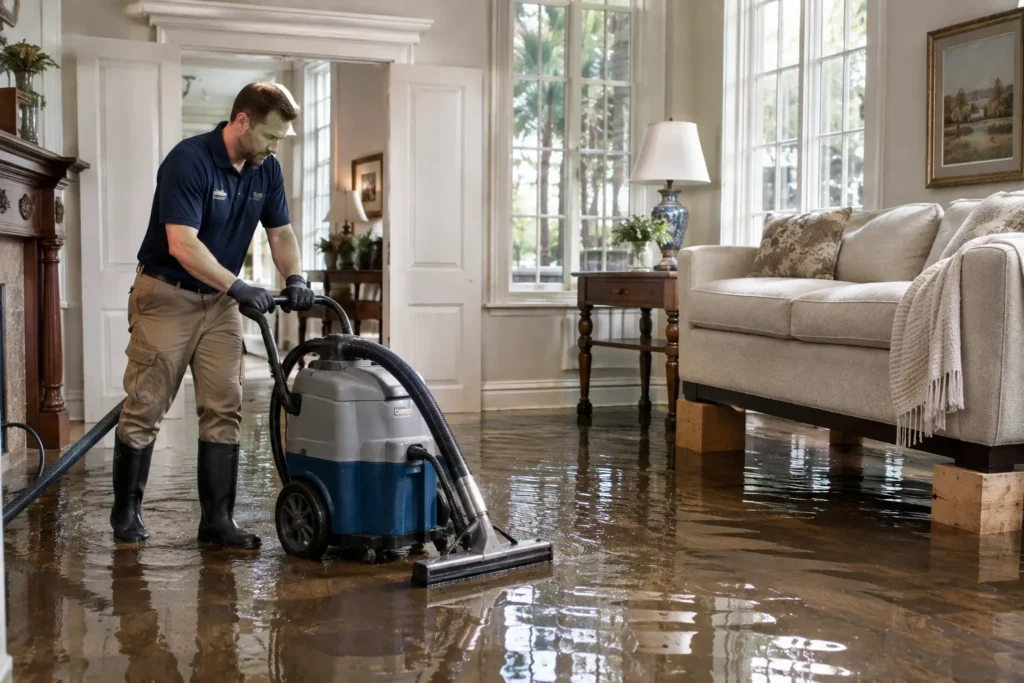
- Water extraction. Standing water comes out first, because materials keep absorbing moisture the longer they sit in it. Our emergency water extraction service covers this step.
- Tear-out of materials that cannot be saved. Floodwater can carry bacteria and debris, so soaked carpet, padding, insulation, and drywall often have to be removed instead of dried.
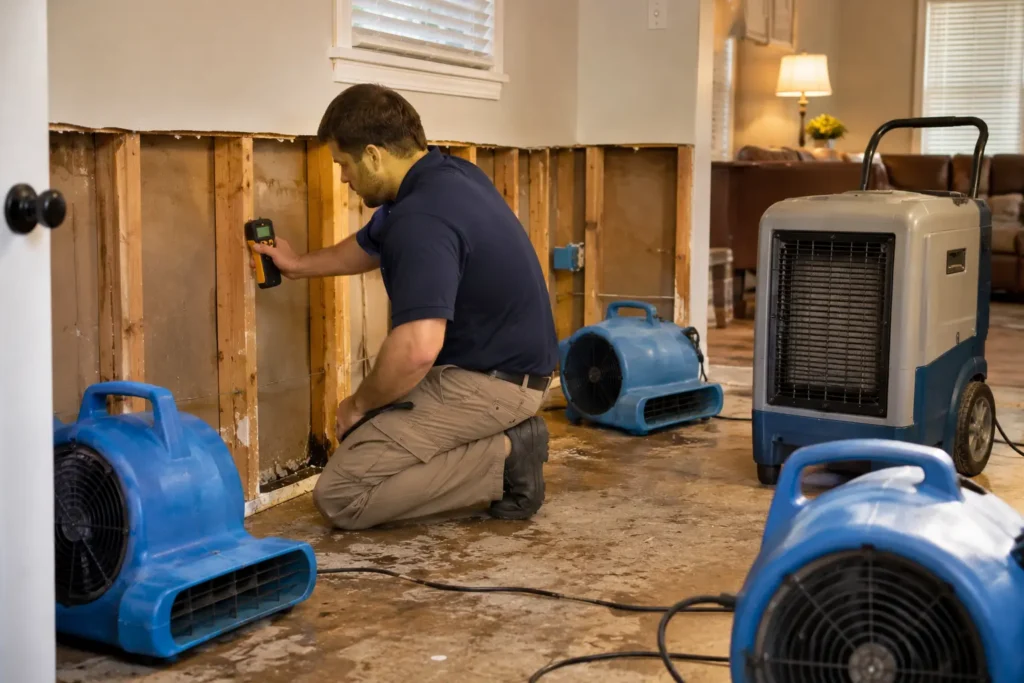
- Moisture mapping. Meters and thermal imaging show where water traveled, including inside walls and under floors, so drying equipment goes where it is needed.
A good company explains what it is removing and why, and does not tear out more than the readings and the water type justify.
Days 1 to 5: Structural Drying and Monitoring
Drying is the longest active phase of flood damage restoration Charleston SC homeowners go through. Air movers and dehumidifiers pull moisture out of framing, subfloor, and the materials that stayed, and in humid conditions that can mean specialized equipment such as our desiccant dehumidification service.
What to expect during this phase:
- Daily or regular visits to check readings and adjust equipment
- Readings recorded at the same points over time, so progress is measured
- A timeline that depends on the flood. Drying often takes several days, and severe or widespread flooding can take longer
If nobody is taking readings, ask why.
End of Drying: Clearance Readings and Mold Checks
Drying is finished when moisture readings show materials are back to normal, not when surfaces feel dry. Mold can begin growing on wet materials within about 24 to 48 hours, which is why speed and verification both matter.
Before anything is closed up, ask for the final readings. If mold growth is found, it calls for its own response, and our black mold remediation service covers that step.
Weeks 1 and Beyond: Repairs and Rebuilding
Once the structure is dry, rebuilding begins. Flood damage repair Charleston SC projects can include new drywall, insulation, subfloor sections, flooring, trim, and paint, and the schedule depends on how many rooms were affected and how long materials take to arrive.
Our guide to water damage repair in Charleston SC explains what usually gets repaired, what gets replaced, and what to ask before approving the work.
What Can Slow Flood Damage Restoration Charleston SC Down
No two floods take the same time. These are the usual reasons a job runs longer than expected:
- Contaminated water, which means more tear-out and disposal before drying begins
- A larger scope, such as several rooms or a lower level instead of one
- Hidden moisture found later inside walls, ceilings, or under flooring
- Power outages after storms, since drying equipment needs electricity
- Flooded or closed roads, which can delay access after hurricanes and major storms
- Insurance approvals and scope questions that pause repairs
- Material lead times for flooring, cabinets, and special finishes
A written timeline that lists these risks up front makes flood restoration in Charleston much easier to plan around.
Flood Damage Restoration Charleston SC: Frequently Asked Questions
How long does flood damage restoration take in Charleston SC?
It depends on how much water came in, what kind of water it was, and how many rooms were affected. Extraction and tear-out usually happen in the first day or two, drying often takes several days, and repairs can take days to weeks after that. A written timeline from your restoration company should say what could change it.
When can repairs start after a flood?
Once moisture readings confirm the structure is dry. Starting earlier can trap moisture and lead to mold, peeling paint, and warped flooring.
Why does floodwater take more work than a pipe leak?
Floodwater can carry bacteria and debris, so soaked porous materials such as carpet, padding, and insulation often have to be removed instead of dried. That adds tear-out and disposal before drying begins.
How do I know drying is finished?
By moisture readings, not by how surfaces feel. Ask for readings taken at the start and end of drying, and for the points where they were taken.
Does flood insurance cover restoration?
It depends on your policy. Flooding from outside the home typically needs a separate flood policy rather than standard homeowners coverage. Check your policy and talk to your insurer before work begins so you know what documentation they need.
Need Help With Flood Damage in Charleston?
Flood damage restoration Charleston SC homeowners need starts with getting the water out and finding out what is still wet. Our team is available 24/7 to assess the damage and explain what the timeline looks like for your home. We work across Charleston and the surrounding area, and you can see the full list on our areas we serve page.
Call (843) 892-8750 now.
Leave a Reply