Water damage Daniel Island SC homeowners deal with often starts quietly, a slow leak from a water heater line, a clogged AC drain, or marsh-edge moisture working its way under a home, and then turns into a major repair once it reaches walls, ceilings, and flooring.
Daniel Island is a master-planned community sitting between the Cooper and Wando Rivers, surrounded by marsh and tidal creeks. Much of it has been built in recent decades, so many homes here have newer plumbing and mechanical systems than the older parts of the Charleston area. That changes which problems show up most often, and it changes how restoration should be handled.
This guide covers what usually causes water damage on Daniel Island, what to do in the first hour, why hidden moisture matters, and what a proper restoration process looks like.
Why Water Damage Daniel Island SC Needs a Local Approach
A few local conditions shape how water damage behaves here:
- Tidal and marsh setting. During storms and high tides, water can rise from creeks and marsh as well as fall from the sky, so flooding is not only a rainfall problem.
- Lowcountry humidity. Damp air slows drying, which means wet drywall, insulation, and wood framing can stay wet far longer than most homeowners expect.
- Hurricane season. The Atlantic season runs June 1 through November 30, and heavy rain, wind-driven water, and surge are all part of the risk during those months.
- More systems, more failure points. Larger, newer homes often have multiple HVAC units, ice makers, water treatment equipment, and long supply line runs. Each one is a place where a slow leak can start unnoticed.
None of this means every Daniel Island home is at the same risk. It means the cause of your damage should be identified before anyone starts drying, because the cause decides how the job is done.
Common Causes of Water Damage Daniel Island SC Homes Face
Storm and tidal flooding. Heavy rain combined with high tide can push water toward foundations, garages, and lower levels. If flooding has already reached your home, our flood damage cleanup service is the place to start.
HVAC condensate overflow. In humid months, air conditioners produce a lot of condensate. When the drain line clogs, the pan fills and water spills into the ceiling or wall below. The stain on your ceiling is often the last sign, not the first.
Water heater and supply line failures. A failing tank or a loose connection can release a large amount of water in a short time, usually in a closet, garage, or utility room where nobody is looking.
Appliance leaks. Dishwashers, washing machines, and refrigerator ice maker lines leak slowly, then suddenly. Water often travels under flooring before it shows.
Roof and window leaks. Wind-driven rain can get past flashing, seals, and vents during tropical storms. The water frequently runs along framing and appears far from where it entered.
Below-floor moisture. In homes with crawl spaces or raised foundations, standing water and constant humidity can affect joists, subfloor, and insulation without any sign inside the living space.
What to Do First When Water Damage Daniel Island SC Strikes
The first hour matters most. Work through these in order:
- Stop the source. If a pipe, appliance, or water heater is leaking, shut off the main water supply or the local valve.
- Cut power to affected areas. Turn off the breaker for any room with standing water before you step in. If you are unsure about electrical safety, stay out and call for help.
- Take photos and video. Record every affected room, waterlines, damaged belongings, and the source if you can see it, before moving anything. Your insurer will want this.
- Remove what is safe to remove. Lift small items, rugs, and furniture off wet floors, and open interior doors to help air move.
- Call a restoration team the same day. If water has reached a crawl space or lower level, our flooded basement and crawl space cleanup service covers the below-floor side of the job.
Why Hidden Moisture Is the Real Problem
A floor that feels dry is not necessarily dry. Water moves into drywall, insulation, baseboards, and subfloor, and it can stay there for days after the visible puddle is gone.
Professionals use moisture meters and thermal imaging to find where water actually went, then dry the structure and keep taking readings until the materials return to normal levels. Skipping that verification is how a job that looks finished turns into a musty smell, a stained wall, or a mold problem a few weeks later.
Mold Risk After Water Damage Daniel Island SC
Mold is the usual consequence of water that stays too long. The EPA’s mold guidance recommends drying wet materials within 24 to 48 hours to prevent mold growth, and in a humid climate that window deserves to be taken seriously.
Signs that moisture is still present include:
- A musty odor that does not clear with ventilation
- Discoloration or staining on walls, ceilings, or baseboards
- Soft, warped, or bubbling drywall and flooring
- Indoor humidity that stays high even with the AC running
Here, the goal is to dry the structure before mold has a chance to start. If you already see widespread mold growth, a separate mold assessment is the right step.
How Professional Water Damage Restoration Works on Daniel Island
A proper job follows a clear sequence:
- Assessment and moisture mapping. Meters and thermal imaging show how far the water traveled, including inside walls and ceilings.
- Water extraction. Standing water is removed first so drying can start as early as possible.
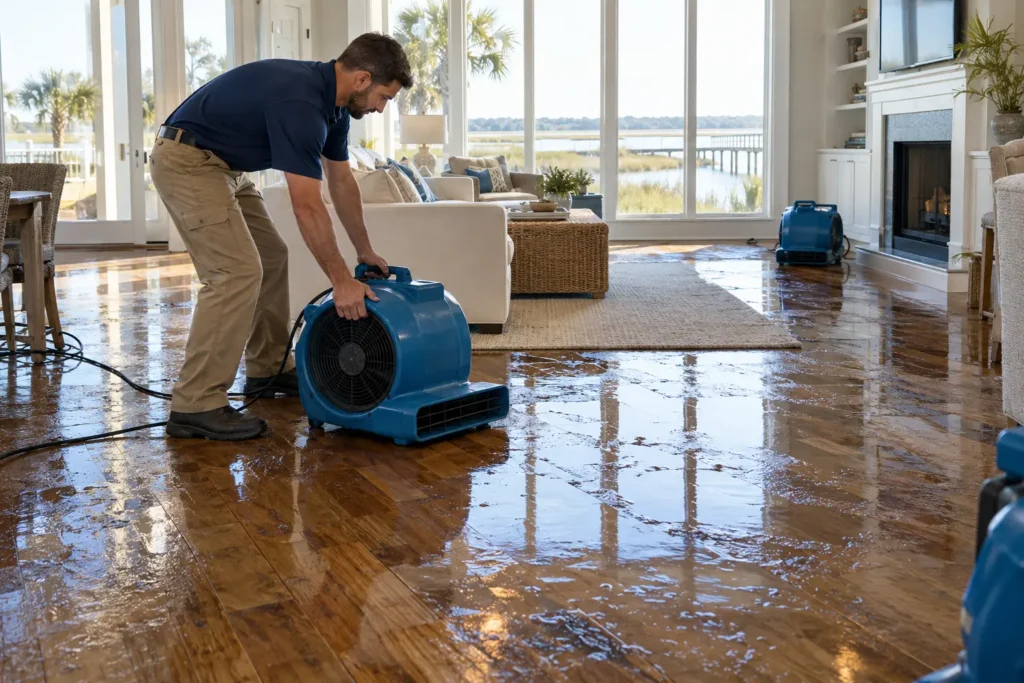
- Structural drying. Air movers and dehumidifiers pull moisture out of materials. How long this takes depends on the materials and how much water was involved, and it often runs for several days.
- Monitoring. Readings are taken during the drying process to confirm progress, not guessed from how surfaces feel.
- Clearance readings. Repairs and rebuilding begin only after materials test dry.
We work on Daniel Island and across the Charleston area, and you can see the full list on our areas we serve page. If you live elsewhere in the metro, our guide to water damage in West Ashley SC covers a different set of local conditions in the same region.
Water Damage Daniel Island SC: Frequently Asked Questions
How fast should I act after water damage on Daniel Island?
Start right away. The EPA advises drying wet materials within 24 to 48 hours to prevent mold growth. Shut off the water source if you can, turn off power to affected areas, take photos, and call a restoration team the same day.
Does homeowners insurance cover water damage on Daniel Island?
It depends on your policy and the cause. Sudden, accidental events such as a burst pipe or appliance failure are often covered, while flooding from outside, such as storm surge or rising creek water, typically needs a separate flood policy. Check your policy and talk to your insurer before cleanup so you know what documentation they need.
Can I dry water damage myself with fans?
Fans and a dehumidifier can help with a small, clean spill on a hard surface. They do not reliably dry water that has moved into walls, insulation, or subfloor. If water has been present for more than a day, or you are unsure how far it traveled, a moisture assessment is the safer next step.
How can I tell if my home has hidden moisture?
Common signs include a musty odor, ceiling or wall stains, bubbling paint, soft or warped flooring, and humidity that stays high indoors. Moisture meters and thermal imaging can confirm where the moisture is without opening up every wall.
What areas near Daniel Island do you serve?
We serve Daniel Island and the surrounding Charleston area. See our areas we serve page for the full list of communities.
Need Help With Water Damage on Daniel Island?
Water damage Daniel Island SC homeowners face gets more expensive with every hour it sits. If you have a leak, a flooded room, or a stain you cannot explain, our team is available 24/7 to assess the damage and start drying.
Call (843) 892-8750 now.
Leave a Reply