Flood cleanup Charleston SC homeowners need to act on is not something you can delay, rethink, or schedule for next week. When flooding hits a Charleston home, the clock starts immediately, and every hour of inaction directly increases your final repair bill, your mold risk, and the likelihood of permanent structural damage to your property.
This guide walks you through exactly what to do from the moment you discover flooding in your home, in the order that actually matters, based on what we see repeatedly here in the Lowcountry.
Why Flood Cleanup in Charleston SC Is Different From Most Cities
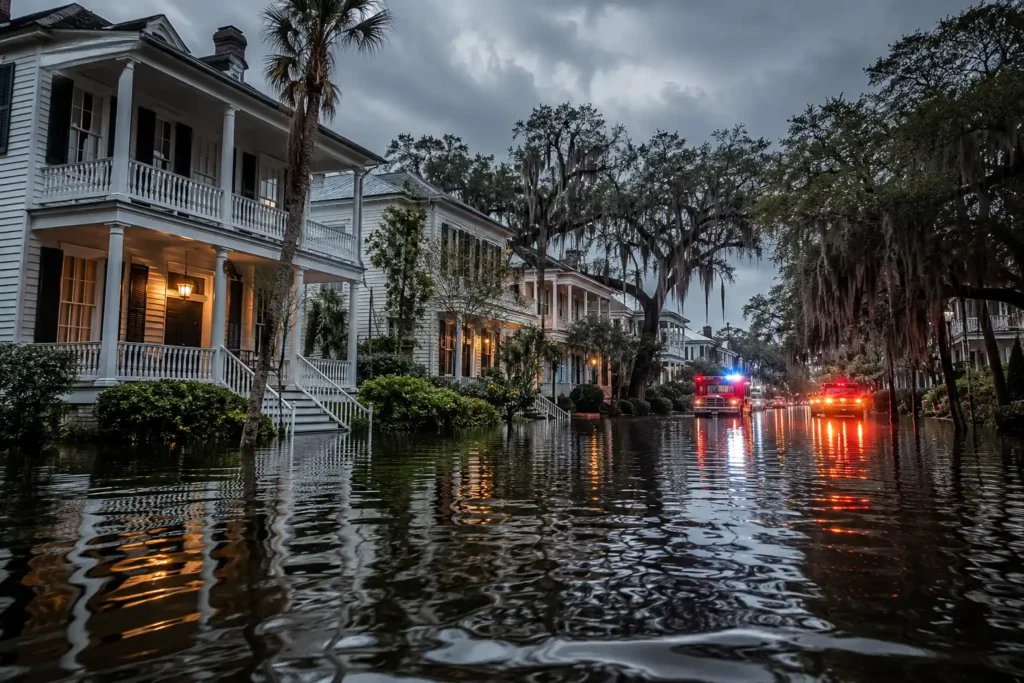
Charleston is not a typical American city when it comes to flooding. The city sits where the Ashley, Cooper, and Wando rivers converge at the Atlantic coast, with large sections of historic neighborhoods, West Ashley, James Island, and the Peninsula resting just a few feet above sea level.
What that means practically is that flooding here comes from multiple directions at once. A single storm event can bring rain from above, tidal surge pushing up through storm drains, and river overflow affecting streets and foundations simultaneously. The result is often contaminated, mixed-source floodwater that carries sediment, bacteria, and in many cases saltwater, directly into homes.
Charleston also sits in a humid subtropical climate where mold does not need much of an invitation. Once water gets inside your walls or under your flooring, mold colonization can begin within 18 to 24 hours, significantly faster than the 48-hour window commonly cited for drier inland climates.
That combination of flood source complexity and aggressive mold conditions is exactly why flood cleanup Charleston SC professionals recommend acting within the first hour – not the first day.
Step 1 – Flood Cleanup Charleston SC: Safety First Before Entering Any Flooded Area
Before touching anything, doing anything, or even walking into a flooded room, stop and check these two things:
- Electricity – If water has reached any outlets, appliances, or electrical panels, do not enter until power to affected areas is shut off at the breaker box. Water and live current together cause serious injuries every year, and the risk is not always visible.
- Structural safety – Look for sagging ceilings, buckled floors, or cracked walls before walking through. Floodwater adds significant weight to building materials and can make previously stable areas dangerous quickly.
If the flooding is extensive or you cannot safely assess the situation, evacuate and call professionals. Trying to manage a major flood event yourself before the area is confirmed safe is one of the most common mistakes Charleston homeowners make.
Step 2 – Stop the Water Source If Possible
If your flooding is coming from a plumbing failure rather than external storm surge, shutting off your main water supply immediately is the single most impactful action you can take in the first few minutes.
A burst pipe damage cleanup situation is fundamentally different from tidal flooding because the water source is controllable. Every minute a burst pipe runs freely inside your home multiplies the volume of water your floors, walls, and subfloor materials are absorbing.
Know where your main water shutoff valve is located before you ever need it. For most Charleston homes it is near the street-facing wall of the home, in a utility area, or near the water meter outside. If you cannot locate it, call your water utility company, they can shut it off from the street.
Step 3 – Document Everything Before You Touch Anything
During any flood cleanup Charleston SC situation, this step feels counterintuitive when you are standing in a flooded room, but it is critical for your insurance claim and your restoration estimate.
Use your phone to photograph and video every affected room before moving furniture, removing water, or touching any damaged materials. Capture:
- Standing water depth against walls and baseboards
- Waterline marks showing how high water reached
- All damaged furniture, flooring, appliances, and personal property
- Any visible structural damage to walls, ceilings, or flooring
Timestamp your documentation, your phone does this automatically. Insurance adjusters use this material to establish the scope of loss, and gaps in documentation consistently result in lower claim settlements.
Step 4 – Remove Standing Water As Fast As Possible
Once safety is confirmed and documentation is complete, getting standing water out of your home is the next priority. The longer water sits in contact with your flooring, baseboards, drywall, and subfloor materials, the deeper moisture penetrates, and the harder it becomes to restore those materials without full replacement.
For minor flooding under an inch or two, wet-dry vacuums and mops can manage extraction reasonably well. For anything more significant, you need professional extraction equipment. Proper flood cleanup Charleston SC extraction removes moisture from below surface level, not just from the top. Truck-mounted extraction systems used by restoration companies remove water at a rate that residential equipment simply cannot match, and they pull moisture from below surface level rather than just from the top.
If your home has a flooded lower level, our flooded basement cleanup service handles the specific challenges of below-grade water removal, including sump pump assessment and crawl space moisture control, which are particularly relevant for Charleston homes with elevated flood risk.
Step 5 – Begin Structural Drying Immediately
Extraction removes standing water. Structural drying removes the moisture that has already been absorbed into your home’s building materials, and it is the step that most homeowners underestimate or skip entirely.
Wet drywall, wet wood framing, and wet subfloor materials that feel dry on the surface can hold enough internal moisture to feed mold growth for weeks. According to the FEMA flood recovery guidelines, untreated moisture in structural materials is the leading cause of secondary damage after flooding, including mold growth, structural weakening, and persistent odor.
Professional structural drying uses a combination of industrial air movers and commercial dehumidifiers running together to create controlled airflow that pulls moisture out of materials rather than just evaporating surface water. Thermal imaging cameras and calibrated moisture meters verify drying progress inside walls and flooring without requiring demolition.
This process typically takes three to five days for moderate flood events in Charleston’s humidity conditions.
Step 6 – Address Contamination If Your Flooding Involved Outside Water
Not all flooding is clean water and professional flood cleanup Charleston SC teams understand the difference between clean and contaminated water events. Charleston’s flooding regularly involves water that has passed through streets, drainage systems, and in coastal surge events, directly from the harbor or rivers. This water carries bacteria, chemicals, and biological contaminants that classify it as Category 2 or Category 3 water under IICRC restoration standards.
Contaminated floodwater requires a different cleanup protocol than clean water pipe failures. Materials that absorbed contaminated water, particularly drywall, carpet, and insulation, often cannot be dried and reused. They need to be removed, properly disposed of, and replaced.
If your flooding involved a main line failure, our main water line break repair and cleanup service handles both the pipe repair and the contamination assessment that follows.
Step 7 – Contact Your Insurance Company With Your Documentation
Once immediate response steps are underway, contact your insurance company and begin the claims process. Most homeowners insurance policies cover sudden and accidental water damage from plumbing failures but do not cover flood damage from external water sources.
If your flooding came from outside your home, a separate flood insurance policy through FEMA or a private carrier is required for coverage. Many Charleston homeowners discover this distinction only after a flood event, which is why understanding your coverage before hurricane season each year is worth the time.
Our team works directly with insurance adjusters and can provide the documentation, moisture readings, and scope reports that support your claim. Reach out through our flood damage cleanup service page for a free same-day assessment.
Call a Certified Professional – Do Not Wait
Every flood situation benefits from professional involvement, but in Charleston specifically, the local conditions make professional response more important than in most cities. The combination of humidity, saltwater risk, and the city’s complex drainage situation means that partial cleanup or delayed response creates problems that are significantly more expensive to fix later.
Our flood cleanup Charleston SC team responds within 60 minutes across Charleston and the Lowcountry, 24 hours a day, 7 days a week. IICRC certified technicians, direct insurance billing, written estimates before any work begins.
Call (843) 892-8750 now for immediate help.
Leave a Reply